
Robin Isard

Author
Robin Isard

Robin Isard

Robin is a faculty librarian and archivist at a small liberal arts university in Canada. He's lived many years overseas, primarily in The Republic of the Gambia, Sierra Leone, Guinea Bissau and Guinea Conakry. He also worked in Ethiopia and Uganda on a telehealth project on behalf of The Hospital for Sick Children in Toronto, Canada. 

Books

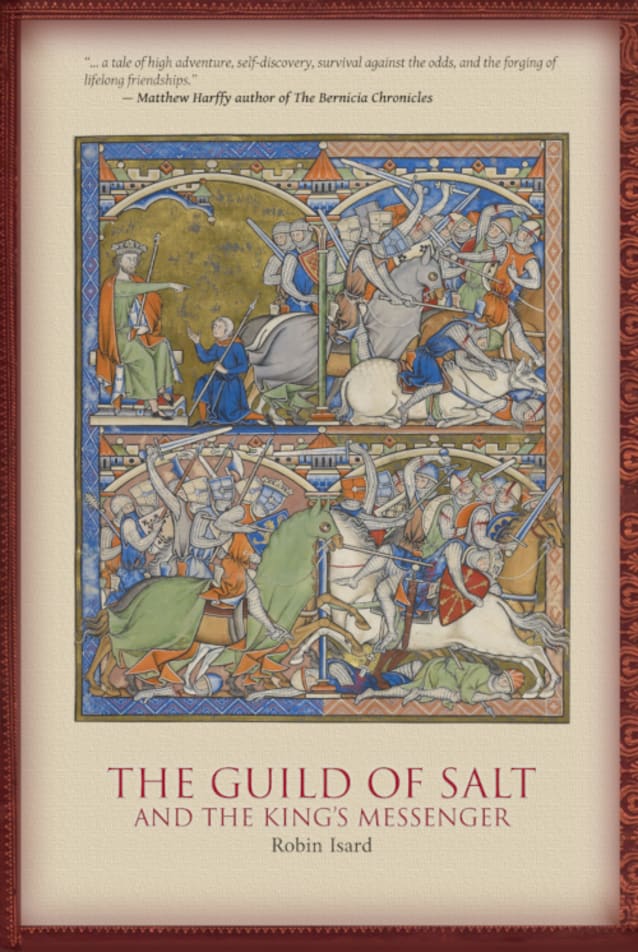
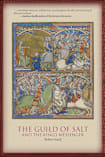
The Guild of Salt and the The King’s Messenger

“... a tale of high adventure, self-discovery, survival against the odds, and the forging of lifelong friendships.”

— Matthew Harffy author of The Bernicia Chronicles


AD 1173.

England is on the brink of war. Loyalties are divided across the nation and nobody is safe.

Young acolyte, Ralph and his friend, Harold, are thrust into the chaos of the...

Read more

Trials Elsewhere: Stories of life and Development in West Africa

The title “Librarian” implies a placid, staid profession, bound by rules and dealing in books within the secure confines of solid and quiet institutions.

In Trials Elsewhere, R. Matthias vividly describes his experiences as a 21st century librarian who does what many young university educated Westerners only say they want to do: travel the...

Read more

Other Writing

The Guild of Salt: historical note.  One of the assigned textbooks

One of the assigned textbooks during my history degree was David Lowenthal’s The Past is a Foreign Country. The title references a quote:

The past is a foriegn country: they do things differently there.— The Go-Between by L. P. Hartley:

And that’s the approach I’ve taken to my historical fiction. It’s like travelling to a foreign country, which demands taking the locals seriously, whether you agree with them or not. It’s their country, after all. No one says you have to agree, but as a guest...


Blog

Shay responds. Exposition isn’t good or bad, it’s just a style.
8lfjncda9nf4zcwig6p141mi6jb8 1.19 MB

If you agree, stop reading and go do something else. If you don’t and want to argue about someone’s opinion on the internet (and be honest we all do) read on.

My interests lie mainly in fantasy and horror…so I’m going to use a seminal author from each genre for my examples: H. P. Lovecraft and J. R. R. Tolkien. In recent years Lovecraft has exploded from a “cult” figure to a household name. ‘Lovecraftian’ has entered the vocabulary of nearly every geek as...

Rethinking exposition.  5cy6u67s6jnmhvvi0s4eewwp8esc 311.62

5cy6u67s6jnmhvvi0s4eewwp8esc 311.62 KB

Exposition. It’s a pain.

I write historical fiction and I try to weave information in via dialogue. However, sometimes passing necessary information via dialogue is either tedious or ridiculous or both. For example, two people born and raised in the 12th century wouldn't have a conversation about what a tally stick is, they'd just know. That’s like two adults in the 21st century having a discussion about what a credit card is.

“So what’s that bit of...

Anachronisms and trying to sound old timey.
viwyt7hhqlgk6qujglv8kqk9bprm 122.94 KB


A friend’s comment on an early draft of Guild of Salt read:

“I think ‘picnic’ is an anachronism. They didn’t use that word in the 12th century, I’m pretty sure.”

My response:

“Well, if I was trying to be that accurate with my language, shouldn’t I have written the whole book in 12th century Anglo-Norman French?”

I don’t like anachronisms any more than the next guy: they throw you out of the story, turning the author’s world-building to ash, yet, to make the...

View All